
ISO 14001 Certification In Tanzania
Go Green with Confidence – ISO 14001 Certification Trusted by Tanzania’s Top Brands!
At ISO-certification-tanzania.com, we focus on helping organizations achieve ISO 14001 Certification in Tanzania, which assists them in developing an effective Environmental Management System (EMS) for sustainability compliance with local and international laws. Our consultants help you with EMS solutions from start to finish, and we create tailored solutions to suit your operations, all at very affordable prices.
With ISO 14001 certification, Tanzanian businesses can effectively reduce their environmental impact while achieving greater operational efficiency. The certification also improves business reputation, garners new eco-minded customers, and improves your standing in regional and international markets.
What is ISO 14001 Certification?
ISO 14001 Certification in Tanzania establishes a global standard for Environmental Management Systems an organization has to put in place. It aids companies in managing the impact of everyday operations on the environment, adopting more responsible and sustainable practices. This standard is best for any organization looking to cut down on waste, conserve energy, and control the spending of environmental resources.
Get Free Consultation
Adopting ISO 14001 aids in firmly demonstrating a genuine commitment to sustainability (Uendelevu)—both in practice and in branding. It also aids in the protection of natural resources, regulatory penalties, operational costs, and augments brand reputation surging it among customers, the wider community (Jamii).
ISO 14001 Certification is especially useful for the construction (Ujenzi), oil and gas (Mafuta na Gesi), manufacturing (Uzalishaji), and tourism (Utalii) industries. The certification is of great importance to local industrial players in Tanzania because, as the country works towards attaining its vision 2025, environmental responsibility is becoming greatly valued. The certification reinforces the ability to meet local and global compliance (Mahitaji ya Kisheria) while enhancing overall business sustainability and environmental performance.
Importance of ISO 14001 Certification in Tanzania
Achieving ISO 14001 Certification in Tanzania unlocks a competitive advantage for shoreline businesses looking to meet exacting environmental policies and practices. With ISO 14001, businesses and companies in Mwanza, Dar es Salaam, Arusha, Dodoma, and Zanzibar can now adopt a more legal considerate waste management operations system, especially as environmental awareness and concern as well as environmental policies become stronger. This Certification not only improves a company’s operational and organizational efficiency, in addition gives them a competitive edge and improves their reputation worldwide and among investors and environmentally friendly customers. It helps Tanzanian businesses become environmentally responsible and aide them to access new markets and international opportunities.
Practicing ISO 14001 helps organizations to:
Gain a competitive edge in a crowded marketplace by adopting environmental citizenship as a company practice.
Increase customer trust, brand loyalty and business volume by Maintenance of Sustainability and transparency.
Increase efficiency, reduce operational costs, reduce energy spending and waste, lower overall spending and improve resource usage.
Enhance both their global and local market presence, strengthen their market position, and meet current and future expectations of environmental care.
ISO 14001 in today’s business world is used and practiced for a more strategic approach to environmental compliance as it helps companies embrace new opportunities for growth and practice innovation.
How to Get ISO 14001 Certification in Tanzania ?
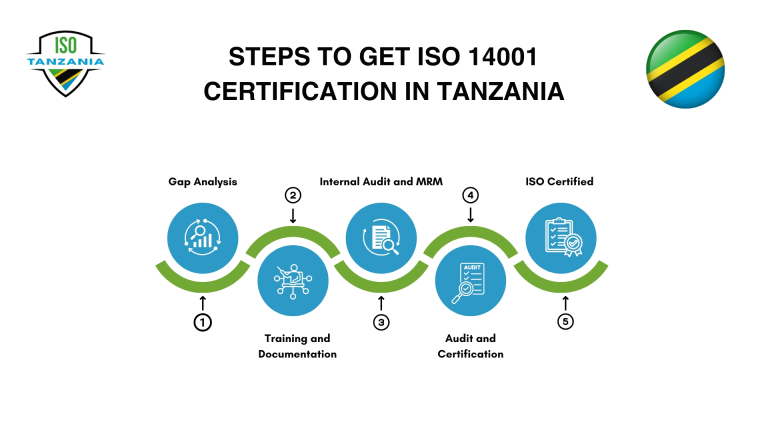
Steps to Achieve ISO 14001 Certification In Tanzania
Gap Analysis & Planning
Assess your current environmental practices against ISO 14001 standards. Identify gaps, risks, and opportunities to plan a customized roadmap for certification readiness and compliance.
EMS Documentation
Develop the Environmental Management System (EMS) documentation, including policies, objectives, procedures, and controls that reflect your organization’s environmental responsibilities and legal obligations.
Implementation & Training
Put the EMS into action across all departments. Conduct employee training and awareness programs to ensure everyone understands their role in achieving environmental goals and compliance.
Internal Audit & Review
Perform internal audits to evaluate system performance and identify areas for improvement. Management reviews the findings to make informed decisions before the external certification audit.
Certification Audit & Approval
An accredited certification body conducts an external audit. Upon successful verification of compliance, your organization is awarded ISO 14001 certification for its Environmental Management System.
Benefits of ISO 14001 Certification In Tanzania
- Improved Environmental Performance: Guides businesses in Tanzania to adopt sustainable practices, thus aiding in the reduction of their environmental impact in an interdisciplinary manner.
- Regulatory Compliance: Reduces the likelihood of facing legal fines, litigations, or shutdowns by ensuring compliance with both local Tanzanian environmental regulations and the global benchmarks.
- Cost Reduction: Drives monetization opportunities by conserving energy, raw materials, and waste management expenses while simultaneously promoting effective resource utilization and minimizing waste.
- Enhanced Brand Image: Improves the company's brand perception domestically and internationally as it demonstrates an commitment towards sustainability.
- Better Risk Management: Helps to limit environmental liability and incidents by controlling the company’s processes and identifying potential environmental risks proactively.
- Access to New Markets: Makes the business appealing to eco-conscious investors and clients while opening opportunities in the environmentally conscious global market.
Overcoming Challenges in Achieving ISO 14001 Certification in Tanzania
While ISO 14001 Certification offers businesses in Mwanza, Dar es Salaam, Arusha, Dodoma, and Zanzibar a pathway to enhanced environmental responsibility and global recognition, the certification journey comes with its own set of challenges. Organizations often face internal resistance to change, a shortage of ISO expertise, and the demanding task of managing detailed documentation. For many businesses, especially SMEs, time constraints and limited resources can further complicate the process. Additionally, selecting the right certification body is critical, as a wrong choice can affect credibility and prolong certification timelines.
Key challenges faced by businesses include:
Resistance to Change Among Employees: Teams may hesitate to adopt new environmental practices, fearing disruption to existing workflows or added responsibilities.
Lack of Internal ISO Knowledge: Many organizations lack in-house expertise in ISO 14001 requirements, which can slow implementation and increase dependency on external consultants or specialized training programs.
Complex Documentation Requirements: Preparing and managing comprehensive ISO 14001 documentation can overwhelm businesses unfamiliar with compliance protocols and environmental management systems.
Time and Resource Limitations: SMEs in particular may find it difficult to dedicate sufficient time, personnel, and financial resources towards the certification process without impacting daily operations.
Selecting the Right Certification Body: Partnering with an inexperienced or non-accredited certification body can lead to costly delays, unnecessary rework, and even certifications that lack global recognition.
However, these challenges are not insurmountable. With the guidance of experienced ISO consultants, businesses across Mwanza, Dar es Salaam, Arusha, Dodoma, and Zanzibar can navigate these hurdles effectively. A well-planned approach, combined with expert support, transforms the ISO 14001 certification journey into a smooth and rewarding process, enabling organizations to achieve compliance efficiently while reaping long-term environmental and business benefits.
What Determines the Cost of ISO 14001 Certification in Tanzania?
The cost of ISO 14001 Certification in Tanzania depends on several factors, including the size of your organization, the complexity of your operations, and your current level of environmental management practices. Typical expenses may include expert consultation, staff training, document preparation, internal audits, and final certification audits by an accredited body.
For an accurate and customized quote, it’s recommended to contact ISO-certification-tanzania.com. Our team of experienced ISO consultants will assess your specific business needs and offer an affordable, transparent pricing plan tailored to your industry.
ISO 14001 Certification in Tanzania is an internationally recognized standard for Environmental Management Systems (EMS). It enables organizations to monitor and improve their environmental impact, reduce resource consumption, and ensure compliance with national and global regulations.
Partnering with ISO-certification-tanzania.com means gaining access to expert guidance, cost-effective solutions, and end-to-end support throughout the certification journey. Take a step toward sustainability and global recognition—apply for your ISO 14001 Certification today and strengthen your business’s environmental credibility.
Why Choose ISO Tanzania.com for ISO 14001 Certification in Tanzania?
ISO-certification-tanzania.com makes ISO 14001 certification seamless and efficient for businesses of all sizes. Our experienced team guides you through every step, ensuring your environmental management system meets international standards without unnecessary delays or complications.
By partnering with ISO-certification-tanzania.com, you benefit from:
Accelerated certification through a streamlined, results-driven process
In-depth expertise in ISO 14001 from seasoned consultants
Tailored solutions aligned with your operational goals and industry requirements
Ongoing support to ensure long-term compliance and continual improvement
Choose ISO-certification-tanzania.com to secure your ISO 14001 certification and elevate your business’s environmental credibility, efficiency, and global market appeal.
FAQ's
What is ISO 14001 Certification?
ISO 14001 is an international standard for Environmental Management Systems (EMS). It helps organizations manage environmental responsibilities effectively and comply with legal requirements.
Why is ISO 14001 important for businesses in Tanzania?
It promotes sustainable practices, reduces waste, ensures regulatory compliance, and improves public image—key advantages for businesses aiming to grow responsibly in Tanzania.
How long does it take to get ISO 14001 certified?
The duration depends on your organization’s size and readiness, but typically ranges from a few weeks to a few months with the right guidance.
What kind of support does ISO-certification-tanzania.com provide?
ISO-certification-tanzania.com offers end-to-end support including documentation, training, audits, and post-certification assistance tailored to your business needs.