
GMP Certification in Tanzania
Precision in Every Product – GMP Certification That Builds Consumer Confidence in Tanzania!
GMP (Good Manufacturing Practices) Certification in Tanzania supports organizations in the pharmaceutical, food, and cosmetics industries to consistently produce high-quality products under strict quality control and hygiene standards. This certification reflects a strong commitment to product safety, regulatory compliance, and operational excellence.
By obtaining GMP Certification through ISO-certification-Tanzania.com, businesses can improve product consistency, enhance consumer trust, reduce risks, and unlock access to both regional and international markets with greater confidence.
What is GMP Certification?
GMP (Good Manufacturing Practice) is a globally acknowledged standard in the pharmaceutical, food, and cosmetic sectors, which ensures the protection, quality, and uniformity of products. It offers a methodical way of recognizing, alleviating, and managing risk in the manufacturing processes.
Get Free Consultation
Manufacturing, processing, and packaging companies in Tanzania dealing with regulated products can earn GMP Certification to prove their adherence to global quality benchmarks and legal obligations.
GMP is relevant to companies producing food, pharmaceuticals, cosmetics, and similar consumer products, guaranteeing that such products undergo hygienic, quality-controlled, and processes-laden continuous improvement.
Importance of GMP Certification in Tanzania:
The importance of Good Manufacturing Practices (GMP) Certification for manufacturing companies in Tanzania, especially pharmaceutical, food, and cosmetic companies, cannot be understated. This practice makes certain that goods are produced and controlled during manufacturing in a systematic way and meets minimum health standards for the safety of the public, while simultaneously ensuring compliance with global standards.
Acquiring GMP Certification from ISO-certification-Tanzania.com provides a company with a recognition of compliancy of the system, safety and health of the consumers, and regulatory compliance. It marks a strong reputation of the brand, assures the customers and traders on health and safety, and also marks accessibility to global markets.
In addition to compliance, the GMP Certification promotes hygiene standards, control of manufacturing processes, and adherence to the standards of the company which leads to operational excellence. This, in turn, promotes the long-term growth and sustainability of the Tanzanian businesses, particularly in key cities like Mwanza, Dar es Salaam, Arusha, Dodoma, and Zanzibar.
How to Get GMP Certification in Tanzania ?
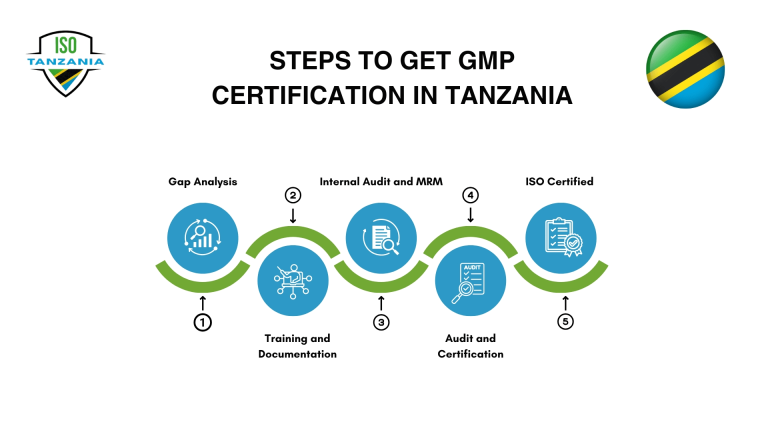
Steps to Achieve GMP Certification In Tanzania:
Initial Consultation and Application
Begin by submitting your company details and product information to ISO-certification-Tanzania.com for an assessment and tailored GMP certification roadmap.
Documentation Review
Experts evaluate your quality manuals, procedures, and records to ensure they align with GMP requirements and reflect proper manufacturing practices.
Gap Analysis & Internal Improvements
A detailed gap analysis identifies non-conformities. Organizations make necessary changes to improve hygiene, documentation, and quality systems.
On-Site Audit and Inspection
Auditors conduct a facility inspection to verify that production processes, cleanliness, and quality control measures comply with GMP standards.
Certification and Continuous Compliance
After meeting all requirements, GMP Certification is granted. Ongoing audits and process monitoring ensure continued adherence to Good Manufacturing Practices.
Benefits of GMP Certification In Tanzania:
- Improved Product Quality: GMP ensures consistent manufacturing processes, leading to high-quality products that meet health, safety, and regulatory standards every time.
- Enhanced Consumer Trust: Certification builds public confidence by showing that your products are safe, reliable, and manufactured under strict quality controls.
- Regulatory Compliance: GMP helps meet national and international health regulations, reducing the risk of penalties or product recalls due to non-compliance.
- Market Access & Export Potential: Certified companies can access broader markets, including international buyers who often require GMP-compliant products for import approval.
- Operational Efficiency: GMP systems streamline production, reduce waste, and improve workflow, resulting in lower operational costs and better resource utilization.
- Competitive Business Advantage: GMP certification differentiates your brand from uncertified competitors, making your products more appealing to customers, partners, and investors.
Who Should Obtain GMP Certification in Tanzania?
In Tanzania, GMP (Good Manufacturing Practices) Certification is vital for vendors who manufacture or handle products that directly affect public health and consumer safety. This certification ensures that products are consistently produced and controlled according to quality standards, promoting hygiene, safety, and compliance.
Here are the key industries and vendors that require GMP Certification across major Tanzanian cities like Mwanza, Dar es Salaam, Arusha, Dodoma, and Zanzibar:
- Pharmaceutical Manufacturers: These companies must follow GMP standards to ensure that medicinal products are safe, consistent, and effective. Compliance also aligns with regulations by the Tanzania Medicines and Medical Devices Authority (TMDA).
- Food and Beverage Processors: Businesses involved in the preparation, processing, and packaging of food products need GMP Certification to prevent contamination and uphold hygiene standards. This ensures consumer protection and enhances product credibility.
- Cosmetics Producers: Manufacturers of personal care and cosmetic items must comply with GMP to guarantee that products are free from harmful ingredients and safe for use, supporting brand trust and regulatory approval.
- Medical Device Manufacturers: Companies that develop or assemble medical devices should implement GMP standards to ensure quality, safety, and functionality, which are essential for healthcare use.
- Herbal and Traditional Medicine Vendors: Producers of herbal or traditional medicines in Tanzania should adopt GMP to ensure product consistency, safety, and compliance with national and international health guidelines.
GMP Certification helps these businesses not only meet TMDA regulations but also gain access to broader markets, both locally and internationally. In growing economic hubs like Dar es Salaam, Mwanza, Arusha, Dodoma, and Zanzibar, GMP compliance serves as a competitive advantage – enhancing consumer confidence, improving brand reputation, and paving the way for long-term business growth.
For trusted and expert certification services, businesses can rely on ISO-certification-Tanzania.com to navigate the GMP process smoothly and successfully.
What Determines the Cost of GMP Certification in Tanzania?
The companies in the pharmaceutical, food, and cosmetic industries are eligible for GMP certifications in Tanzania, and that is why this is such a strategically smart move. Depending on the size of the organization, its production processes, and the certifying body in question, the certification cost may vary. It may include application fees, staff training, documentation preparation, and audit charge.
The certification may seem too expensive at first, however, the investment guarantees business growth and success. Other benefits include improved customer confidence, business opportunities, long-term success, and market access. Companies in Tanzania—including key cities such as Mwanza, Dar es Salaam, Arusha, Dodoma, and Zanzibar—and on an international level too, are able to achieve stronger market and competitive positions along with enhanced access to various markets.
With the help of ISO-certification-Tanzania.com, this GMP certification can be achieved in no time at all. Having fully prepared documentation and passing the audits is an essential step in meeting international standards, and their consultants help you throughout the journey at a cost-effective rate. Start now and distinguish yourself with regards to the safety, hygiene, and quality of your products.
Why Choose ISO-Certification-Tanzania.com for GMP Certification in Tanzania?
For the best GMP Certification in Tanzania, trust ISO-certification-Tanzania.com your reliable partner for tailored and professional certification solutions. With a deep understanding of industry requirements, our experienced auditors will support you through every phase of the certification process, making it smooth and straightforward.
From documentation to audit preparation, we ensure your organization meets all GMP standards efficiently. You’ll benefit from clear communication, personalized service, and a hassle-free process designed to achieve full compliance while strengthening your product quality and market reputation.
Choose ISO-certification-Tanzania.com, a trusted name in certification, auditing, and consultancy services in Tanzania.
FAQ's
What is GMP certification and why is it important for businesses in Tanzania?
GMP (Good Manufacturing Practices) certification ensures that manufacturing processes meet strict safety and quality standards. For businesses in Tanzania—especially in food, pharmaceutical, and cosmetic industries—it helps build trust, improve product consistency, and meet international regulations.
Who needs GMP certification in Tanzania?
GMP certification is essential for any company in Tanzania that manufactures or processes products like medicines, food, cosmetics, or supplements. It proves compliance with hygiene, safety, and global quality practices, making your business more credible and market-ready.
How do I get GMP certified in Tanzania?
To get GMP certification in Tanzania, your business must follow the right procedures: documentation, process control, internal audits, and a final inspection by a certifying body. Trusted consultants like ISO-certification-Tanzania.com can help you every step of the way.
What are the main benefits of GMP certification for Tanzanian companies?
GMP certification improves product quality, enhances operational efficiency, ensures regulatory compliance, and boosts customer trust. It also opens new opportunities in both local and global markets for Tanzanian manufacturers.