
HOW A DIGITAL QMS IMPROVES EFFICIENCY IN LABORATORIES AND MANUFACTURING PLANTS
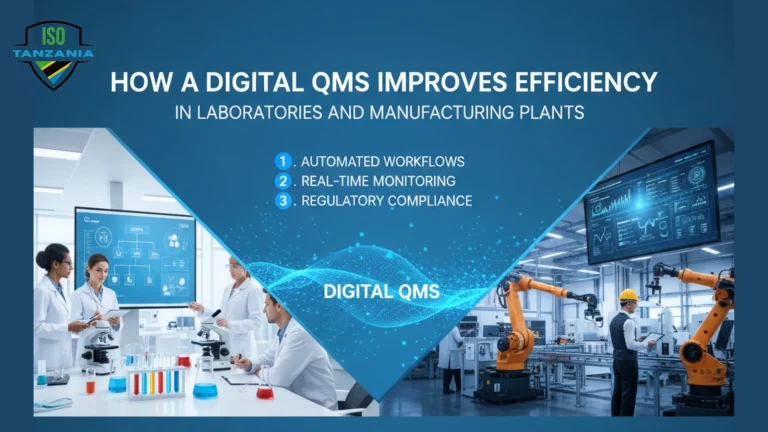
The drive for greater efficiency is a constant in the world of modern business, especially within heavily regulated sectors like laboratories and manufacturing plants. These environments, characterized by complex processes, stringent quality requirements, and immense data loads, are often held back by legacy, paper-based, or fragmented Quality Management Systems (QMS). The solution lies in the transition to a Digital QMS.
A Digital QMS is more than just a software platform; it is a holistic, integrated, and automated system that governs every quality-related activity, from document control and training management to non-conformance tracking and internal audits. By digitizing these core functions, organizations don’t just ‘go paperless’; they fundamentally reshape their operational landscape, leading to dramatic and measurable improvements in efficiency.
This comprehensive guide will explore the multifaceted ways a Digital QMS revolutionizes efficiency in both laboratory and manufacturing settings, demonstrating its necessity for organizations aiming for world-class quality and compliance.
1. The Core Problem: Inefficiency in Traditional QMS
Before diving into the solution, it’s essential to understand the drag exerted by traditional, paper-based, or hybrid quality systems. These older methods are inherently inefficient due to several factors:
- Document Bloat and Retrieval: Physical archives and scattered digital files make locating the current version of a Standard Operating Procedure (SOP) or a specific batch record slow, error-prone, and a major time sink.
- Manual Workflow Bottlenecks: Sign-offs for document reviews, change controls, or corrective actions are often manual (physical signatures or email chains), creating delays and dependency on individuals’ physical presence.
- Data Silos and Inconsistent Data: Quality data (e.g., test results, defect rates, calibration logs) is often kept in disparate systems (spreadsheets, lab notebooks, legacy software), making trend analysis and root cause investigations extremely difficult and time-consuming.
- Audit and Compliance Stress: Preparing for an audit under a paper-based system involves frantic searching and compiling of records, which significantly diverts resources from productive work.
A Digital QMS addresses these friction points directly, paving the way for a more streamlined, responsive, and efficient operation.
2. Digital QMS for Enhanced Laboratory Efficiency:
Laboratories—from analytical and calibration labs to pharmaceutical R&D facilities, operate under strict regulatory frameworks like ISO/IEC 17025 (for testing and calibration labs) and GLP (Good Laboratory Practice). Efficiency in this context means reducing sample processing time, ensuring data integrity, and maintaining rapid, demonstrable compliance.
Automated Document and Training Management:
The foundation of lab quality is the strict adherence to approved methods and procedures.
Efficiency Driver: | Traditional Method: | Digital QMS Solution: |
|---|---|---|
| Document Control | Manual version tracking, physical sign-offs, risk of using obsolete SOPs. | Automated Version Control: Ensures analysts only access the latest, approved version. Automated review cycles and digital signature workflows slash approval times. |
| Personnel Training | Paper-based training logs, manual scheduling of competency checks. | Integrated Training Modules: Links SOP changes directly to required staff training. Automated notifications, completion tracking, and digital testing verify and document competency instantly. |
Streamlined Non-Conformance and CAPA:
When a test fails to meet specifications or an instrument malfunctions, the lab must initiate a Non-Conformance and, potentially, a Corrective and Preventive Action (CAPA).
- Rapid Investigation: A Digital QMS provides a centralized portal for logging the event. It instantly links the event to relevant equipment maintenance logs, training records, and batch data, accelerating the root cause analysis.
- Workflow Acceleration: CAPA workflows—from investigation assignment to effectiveness check—are digitally enforced. Automated task assignments and deadline tracking prevent delays and ensure timely closure, which is critical for maintaining lab throughput and minimizing repeat errors.
Equipment Calibration and Maintenance:
Equipment downtime is a major lab inefficiency. A Digital QMS manages the complete lifecycle of laboratory assets.
- Proactive Scheduling: The system automatically tracks calibration and maintenance schedules, generating alerts well in advance.
- Audit Trail: Every maintenance or calibration event, along with the associated certificates, is logged against the specific equipment record, providing an unimpeachable audit trail required by all major lab standards.
3. Digital QMS for Manufacturing Plant Efficiency:
In manufacturing—especially regulated sectors like food, medical devices, and automotive—efficiency is directly tied to yield, cycle time, and minimized scrap/rework. Compliance with standards like ISO 9001 and industry-specific regulations (e.g., cGMP) is non-negotiable.
a. Accelerated Change Management (Change Control):
Any change in a manufacturing process—a raw material supplier, a machine parameter, or a Bill of Materials (BOM), requires a rigorous Change Control process.
- Integrated Impact Analysis: A Digital QMS allows the change initiator to define the scope, and the system automatically notifies all necessary stakeholders (e.g., Engineering, Quality, Production) based on the specific type of change.
- Parallel Reviews: Reviews that would traditionally take days to circulate can be conducted simultaneously, dramatically reducing the time it takes to implement an approved change and bring a product to market or production.
b. Real-Time Management of Defects and Deviations:
The speed at which a manufacturing deviation is identified, contained, and resolved directly impacts efficiency (and cost).
- Shop Floor Integration: Integration with Manufacturing Execution Systems (MES) or direct shop floor input allows operators to instantly log a defect or deviation via a mobile device or terminal.
- Immediate Action: Quality personnel are instantly alerted, and pre-defined containment actions (e.g., holding a batch) are triggered electronically. This prevents further defective material from being processed, saving significant time and resources from rework or scrap.
c. Supplier Quality Management
In a global supply chain, efficiency is often compromised by delays or quality issues from external suppliers.
- Automated Vetting: A Digital QMS maintains approved supplier lists, qualification documents, and performance scorecards.
- Inspection Integration: It can schedule incoming inspection requirements based on the supplier's performance history, reducing unnecessary inspection time for high-performing vendors and focusing resources where they are needed most.
4. Unlocking Data-Driven Efficiency: Analytics and Reporting:
Perhaps the single biggest efficiency gain from a Digital QMS is the shift from reactive to proactive quality management.
a. Centralized, Structured Data:
By forcing quality data (CAPAs, audits, non-conformances, training) into a single, structured database, the system eliminates data silos. This instantly makes the data analyzable.
b. Trend Analysis and Predictive Insights:
- Rapid Reporting: Generating a report on the top five root causes of scrap over the last quarter, which might take days in a paper-based system, is instantaneous with a Digital QMS dashboard.
- Proactive CAPA: Identifying recurring patterns (e.g., a specific production line consistently generating a certain defect) allows management to implement a targeted Preventive Action before the issue escalates into a major failure, saving significant costs and downtime.
c. Flawless Audit Readiness:
The stress and resource drain of audits are drastically reduced. A Digital QMS is perpetually “audit-ready.” Auditors can be granted secure access to the system, instantly verifying document version control, training compliance, and the status of CAPAs—turning a multi-day scramble into a smooth, efficient review process.
5. Achieving Compliance and World-Class Efficiency with Expert Guidance:
The transition to a Digital QMS often accompanies the pursuit of formal ISO certification—the international benchmark for quality and process efficiency. ISO standards, such as ISO 9001 (Quality Management), ISO 17025 (Laboratory Competence), and ISO 13485 (Medical Devices), mandate systematic approaches that are perfectly underpinned by a robust Digital QMS.
For organizations in Tanzania and the wider East African region looking to implement or upgrade their quality systems to meet these world-class standards, partnering with an experienced certification body is essential.
Why Choose Popularcert for Your ISO Certification in Tanzania?
Achieving ISO compliance is not just about a certificate; it’s about institutionalizing the efficient, digital processes discussed throughout this guide. Popularcert is a premier certification provider dedicated to helping organizations in Tanzania and across Africa realize their quality and efficiency goals.
- Local Expertise, Global Standards: Popularcert understands the specific regulatory and operational challenges faced by Tanzanian laboratories and manufacturers while ensuring their systems meet rigorous international ISO requirements.
- A Partner in Digital Transformation: Popularcert's auditors and consultants focus not just on compliance but on how to leverage the digital QMS implementation to genuinely improve business efficiency and competitive advantage.
- Comprehensive Certification Services: Whether your goal is the core ISO 9001 certification to demonstrate quality commitment, or more specific standards like ISO/IEC 17025 for lab accreditation, Popularcert provides transparent, expert, and value-driven certification services.
By choosing Popularcert, your organization gains a strategic partner committed to certifying a QMS that is not merely compliant but is a powerful, efficient, and profit-generating operational asset.
Conclusion: The Mandate for Digital Quality
The question is no longer if an organization should adopt a Digital QMS, but how quickly. For laboratories and manufacturing plants, the competitive and regulatory pressures are too high to sustain manual, inefficient, and error-prone paper systems.
A Digital QMS drives efficiency through automation, integration, and data centralization. It converts slow, sequential processes into fast, parallel workflows; replaces guesswork with actionable analytics; and transforms compliance from a necessary burden into a continuous, seamless state. This results in:
- Faster Product/Sample Release: Reduced cycle times mean increased throughput.
- Lower Operating Costs: Minimized scrap, rework, and administrative overhead.
- Superior Compliance: Consistently maintained audit readiness and data integrity.
To maximize the benefits of this digital transformation, particularly in meeting the efficiency benchmarks set by international quality standards, securing expert certification is the final, crucial step. Popularcert stands ready in Tanzania to validate your advanced, efficient, and compliant Digital QMS, helping your organization achieve peak operational performance and establish a global competitive edge.
Invest in a Digital QMS, partner with Popularcert, and secure your future efficiency and quality.
FAQ's
How does a Digital QMS save time on documentation?
It uses electronic records, templates, and automated workflows for document creation, review, approval, and distribution, eliminating slow, manual, paper-based processes and ensuring instant access to the latest versions.
What role does automation play in boosting efficiency?
Automation manages routine tasks like routing for approvals, scheduling training, notifying personnel of overdue tasks, and tracking deviations, allowing staff to focus on core technical work instead of administrative overhead.
How does it improve efficiency in handling non-conformances or deviations?
A Digital QMS provides structured, guided workflows for logging, investigating, and resolving non-conformances (including CAPAs), ensuring timely follow-up, faster root cause analysis, and reduced cycle time for closure.
Can a Digital QMS help with audits and regulatory compliance?
Yes, it centralizes all quality records (training, equipment calibration, document history) in one secure, easily searchable platform, making audit preparation faster and providing auditors with immediate, verifiable evidence of compliance.