
THE BIG LIST: TOP 7 ISO STANDARDS EVERY GROWING TANZANIAN BUSINESS SHOULD HAVE IN 2026
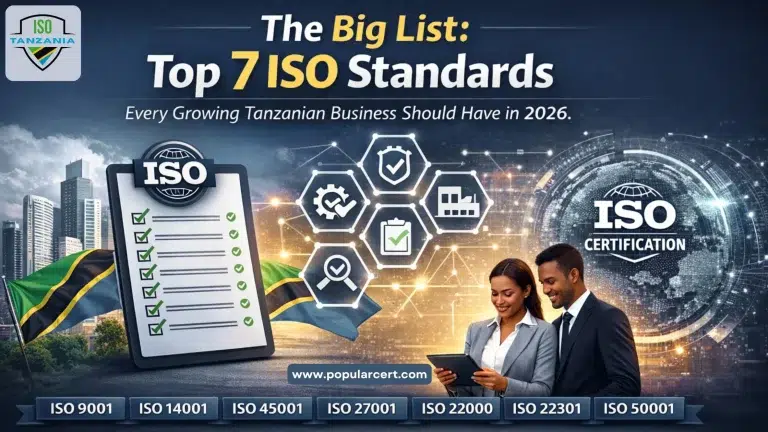
Tanzania is currently witnessing an unprecedented economic surge. As of January 2026, the Bank of Tanzania projects a robust 6% growth rate for the mainland, with Zanzibar’s economy expanding even faster. Driven by a boom in agriculture, mining, and construction, the “Tanzanian Dream” is more attainable than ever for local entrepreneurs.
However, with rapid growth comes a significant challenge: Global Competition. In 2026, simply having a great product is no longer enough. To secure international contracts, participate in high-value government tenders, or export to SADC and EAC markets, Tanzanian businesses must speak the international language of trust. That language is ISO Certification in Tanzania.
Whether you are a logistics firm in Dar es Salaam, a cashew processor in Mtwara, or a tech startup in Arusha, here are the top seven ISO standards you need to scale your business this year.
1. ISO 9001:2026 – Quality Management System (QMS)
The “Gold Standard” has received a fresh update. As the most recognized certification globally, ISO 9001 remains the bedrock of any successful company. The 2026 revision places a stronger emphasis on digital integration and risk-based thinking in a post-pandemic, high-tech world.
Why it matters for Tanzanian Businesses:
In Tanzania’s competitive construction and manufacturing sectors, ISO 9001 is often a mandatory requirement for government tenders. It ensures that your internal processes are streamlined, reducing waste and increasing profitability.
Key Benefits:
- Operational Efficiency: Eliminates redundant steps in your production line.
- Customer Trust: Proves to international buyers that your quality is consistent.
- Market Entry: Essential for businesses looking to export within the East African Community.
2. ISO 14001:2026 – Environmental Management System (EMS)
Tanzania is a global leader in natural beauty and biodiversity. In 2026, the “Green Economy” is not just a buzzword; it’s a fiscal reality. The updated ISO 14001:2026 focuses on climate resilience and biodiversity protection.
Why it matters for Tanzanian Businesses:
For businesses in the mining and tourism sectors, environmental compliance is critical. International investors and eco-conscious tourists are looking for companies that don’t just “do business” but “do good.”
Key Benefits:
- Regulatory Compliance: Helps you stay ahead of NEMC (National Environment Management Council) requirements.
- Cost Savings: Encourages better resource management, leading to lower water and electricity bills.
- Brand Reputation: Positions your business as a leader in Tanzania’s sustainable future.
3. ISO 27001 – Information Security Management System (ISMS)
With the full implementation of the Personal Data Protection Act and stricter regulations from the TCRA (Tanzania Communications Regulatory Authority), data security has become a legal survival kit in 2026.
Why it matters for Tanzanian Businesses:
Tanzania’s Fintech and digital services sectors are exploding. If you handle customer data, bank details, or proprietary software, a single data breach could bankrupt you. ISO 27001 provides a framework to protect your digital assets from cyber threats.
Key Benefits:
- Data Breach Protection: Safeguards sensitive customer and company information.
- Global Contracting: Many international tech partners will not sign a deal without this certification.
- Legal Shield: Demonstrates "due diligence" in the event of a cyber-audit.
4. ISO 45001 – Occupational Health and Safety (OH&S)
Tanzania’s infrastructure boom including the SGR (Standard Gauge Railway) and the EACOP (East African Crude Oil Pipeline)—has placed a spotlight on worker safety.
Why it matters for Tanzanian Businesses:
For companies in construction, mining, and heavy manufacturing, workplace accidents are not just tragedies; they are massive financial liabilities. ISO 45001 ensures your employees go home safe every day, which in turn keeps your production lines moving.
Key Benefits:
- Reduced Insurance Premiums: Many insurers offer lower rates to ISO 45001-certified companies.
- Enhanced Morale: Happy, safe workers are more productive.
- Tender Advantage: A "must-have" for any business bidding for oil, gas, or mining sub-contracts.
5. ISO 22000 – Food Safety Management System (FSMS)
Agriculture is the backbone of Tanzania, employing nearly two-thirds of the workforce. However, the world is becoming stricter about what it puts on its dinner tables.
Why it matters for Tanzanian Businesses:
Whether you are exporting cloves from Zanzibar, coffee from Moshi, or avocados from Njombe, ISO 22000 is your passport to the world. It covers the entire food supply chain, from “farm to fork.”
Key Benefits:
- Export Growth: Opens doors to European and North American supermarkets.
- Risk Mitigation: Drastically reduces the risk of foodborne illnesses and expensive product recalls.
- Brand Loyalty: Tanzanian consumers are increasingly looking for safety logos on their food packaging.
6. ISO 50001 – Energy Management System (EnMS)
As Tanzania expands its industrial capacity, energy costs remain one of the biggest overheads for businesses. ISO 50001 provides a roadmap to optimize energy use.
Why it matters for Tanzanian Businesses:
With the recent completion of major power projects like the Julius Nyerere Hydropower Plant, the focus is now on efficient consumption. Large-scale manufacturers in Dar es Salaam and Mwanza can save millions of TZS annually by implementing energy-efficient processes.
Key Benefits:
- Direct Profit Impact: Every Shilling saved on electricity is a Shilling added to your net profit.
- Sustainability Goals: Directly contributes to Tanzania’s Vision 2025 (and beyond) regarding sustainable industrialization.
- Carbon Footprint: Reduces greenhouse gas emissions, making you more attractive to "Green Investors."
7. ISO 22301 – Business Continuity Management (BCM)
The last few years have taught the world one thing: disruptions are inevitable. Whether it’s a global supply chain crisis, a local power outage, or a climate-related event, your business needs to stay operational.
Why it matters for Tanzanian Businesses:
For logistics, banking, and essential service providers in Tanzania, “downtime” is not an option. ISO 22301 helps you identify potential threats and build a plan to keep the lights on during a crisis.
Key Benefits:
- Resilience: Ensures your business survives shocks that would sink your competitors.
- Customer Assurance: Your clients know they can rely on you, even in difficult times.
- Strategic Planning: Helps leadership understand the vulnerabilities in their supply chain.
Why ISO Certification is the Best Investment in 2026
Achieving ISO Certification is more than just putting a sticker on your website. It is a fundamental transformation of how your business operates.
Standard: | Core Focus: | Best For: |
|---|---|---|
| ISO 9001 Standard | Quality & Efficiency | All Businesses |
| ISO 14001 Standard | Environmental Impact | Mining, Tourism, Industry |
| ISO 27001 Standard | Cybersecurity | IT, Fintech, Banking |
| ISO 45001 Standard | Employee Safety | Construction, Oil & Gas |
| ISO 22000 Standard | Food Safety | Agri-exporters, Food Processing |
| ISO 50001 Standard | Energy Savings | Heavy Industry, Hotels |
| ISO 22301 Standard | Business Resilience | Logistics, Finance, Infrastructure |
Partnering with Popularcert: Your ISO Journey in Tanzania
Navigating the world of ISO standards can feel overwhelming. Many Tanzanian business owners worry about the complexity, the cost, and the time required to get certified.
This is where Popularcert comes in.
As a leading ISO Certification provider in Tanzania, Popularcert is dedicated to simplifying the path to global excellence. We understand the local market—from the bustling streets of Kariakoo to the industrial hubs of Mwanza.
Why Choose Popularcert?
- Local Expertise, Global Reach: We provide ISO certification services tailored to Tanzanian regulations and market conditions while maintaining international standards.
- Simplified 3-Step Process: We break down the complex ISO requirements into manageable steps, ensuring your business gets certified without the stress.
- Cost-Effective Solutions: We believe that world-class standards should be accessible to growing Tanzanian SMEs, not just large corporations.
- Expert Consultants: Our team in Dar es Salaam and Arusha provides hands-on support, training, and auditing to ensure you are 100% ready for certification.
Conclusion: Don’t Just Grow—Standardize
As we move through 2026, the gap between “standardized” businesses and “unregulated” ones will widen. The companies that thrive will be those that have the foresight to implement these seven ISO standards today.
Are you ready to take your Tanzanian business to the next level? Whether you’re looking for ISO 9001 to improve quality or ISO 27001 to protect your data, the team at Popularcert is here to help.
FAQ's
What are ISO standards, and why are they important for Tanzanian businesses?
ISO standards are international guidelines for quality, safety, and efficiency. They help Tanzanian businesses improve operations, gain customer trust, and compete globally.
Which ISO standards are most relevant for growing businesses in Tanzania in 2026?
Key standards include ISO 9001 (Quality), ISO 14001 (Environment), ISO 45001 (Health & Safety), ISO 22000 (Food Safety), ISO 50001 (Energy), ISO 22301 (Business Continuity), and ISO 27001 (Information Security).
How can ISO certification benefit my business in Tanzania?
Certification boosts credibility, ensures compliance with regulations, improves efficiency, reduces risks, and opens doors to international markets.
How do Tanzanian businesses get ISO certified?
Businesses select the relevant ISO standard, implement its requirements, conduct internal audits, and work with a recognized certification body to achieve official certification.