
WHAT'S THE DIFFERENCE BETWEEN HALAL AND KOSHER CERTIFICATION IN TANZANIA?
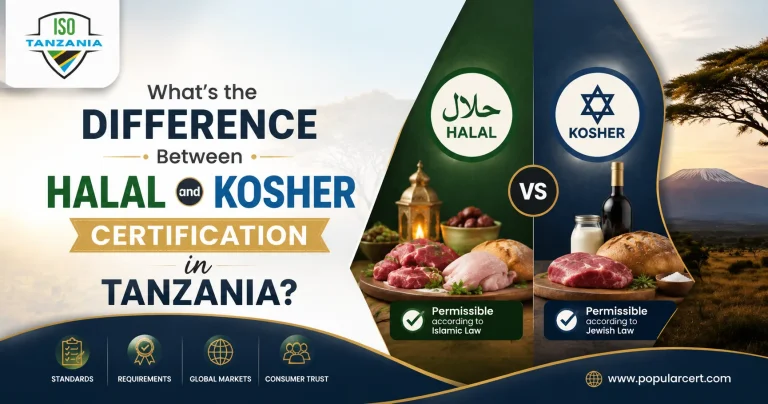
If you walk into any supermarket in Dar es Salaam, Arusha, or Zanzibar today, you will notice something interesting. More and more food packages carry small logos that say Halal Certification or less commonly, Kosher Certification. For an average shopper, these logos might look similar, both seem to be about religious food rules, and both seem to guarantee that a product is clean or permitted. But the truth is, Halal and Kosher Certification are two very different systems, built on different religious laws, inspection processes, and markets.
For Tanzanian businesses that want to export food, cosmetics, or pharmaceutical products, or simply sell confidently in the local market, understanding this difference is not just useful, it is necessary. Getting it wrong can cost you a shipment, a client relationship, or your reputation in a new market. This article breaks down what Halal and Kosher Certification really mean, how they differ, why they matter in Tanzania, and how a trusted partner like Popularcert can help your business get it right.
Understanding Halal Certification:
The word Halal is Arabic and means permissible and lawful. Halal Certification confirms that a product, usually food, but also cosmetics, pharmaceuticals, and even logistics services meets the requirements set out in Islamic law, known as Shariah.
For food products, Halal rules cover several key areas:
- The source of ingredients: Pork and its by-products are strictly forbidden. Alcohol and certain other intoxicating substances are also not allowed.
- The method of slaughter: Animals must be slaughtered by a trained Muslim following a specific method (Dhabihah), which includes a prayer, a swift cut to specific parts of the neck, and draining of the blood.
- Cross-contamination control: Halal products must be processed, stored, and transported separately from non-Halal items to avoid contact with forbidden substances.
- Additives and processing aids: Even small ingredients like emulsifiers, gelatin, or enzymes must be checked, because many of these can be derived from non-Halal animal sources.
Halal Certification is especially important in Tanzania because the country has a significant Muslim population, particularly along the coast, in Zanzibar, and in many urban centers. Beyond the domestic market, Halal Certification opens doors to some of the fastest-growing food markets in the world, the Gulf states, Malaysia, Indonesia, and other OIC (Organisation of Islamic Cooperation) member countries, many of which require Halal Certification as a mandatory condition for importing food products.
Understanding Kosher Certification:
Kosher comes from a Hebrew word meaning fit or proper.Kosher Certification confirms that a product follows Jewish dietary law, known as Kashrut. Like Halal, Kosher rules are detailed and specific, but they follow a different set of principles rooted in Jewish religious tradition rather than Islamic law.
Some of the core Kosher requirements include:
- Permitted and forbidden animals: Land animals must have split hooves and chew their cud (so cows and sheep are permitted, but pigs are not). Seafood must have both fins and scales, which excludes shellfish, catfish, and similar species.
- Separation of meat and dairy: Kosher law strictly forbids mixing meat and milk products in the same meal or even using the same equipment for both without proper separation.
- Method of slaughter: Animals must be slaughtered by a trained Jewish person called a Shochet, using a method called Shechita, which shares some similarities with Halal slaughter but follows its own distinct religious rules and blessings.
- Supervision requirements: Kosher Certification usually requires a Rabbi or trained Kosher supervisor (called a Mashgiach) to be present or regularly checking production, especially for processed foods.
Kosher-certified products are in demand mainly in markets with significant Jewish populations, such as the United States, Israel, and parts of Europe. Interestingly, many non-Jewish consumers around the world also trust Kosher-certified products because they associate the Certification with strict quality control and cleanliness.
Key Differences Between Halal and Kosher Certification:
While both systems share a similar goal assuring consumers that a product follows religious dietary law the differences are significant:
- Religious foundation: Halal follows Islamic Shariah law. Kosher follows Jewish Kashrut law. These are two separate religious traditions with their own scholars, texts, and interpretations.
- Slaughter method: Both require a trained religious practitioner and a swift, careful method of slaughter with blood drainage, but the prayers, blessings, and specific technical requirements differ between Dhabihah (Halal) and Shechita (Kosher).
- Meat and dairy mixing: This is a uniquely Kosher rule. Halal has no such restriction, meat and dairy can be combined freely in Halal food, as long as both are Halal-compliant individually.
- Alcohol: Halal strictly forbids alcohol in the product or in the production process. Kosher law permits alcohol, including wine, under certain religious supervision (in fact, Kosher wine is its own well-known category).
- Certifying authority: Halal Certification is typically issued by Islamic Certification bodies working with Halal-accredited scholars and inspectors. Kosher Certification is issued by recognized Kosher agencies working with Rabbis and Kashrut supervisors.
- Target markets: Halal Certification targets the global Muslim population, which is over 1.9 billion people, and is a legal requirement for food imports in many Muslim-majority countries. Kosher Certification targets Jewish consumers and markets, and is also valued by health-conscious and quality-focused buyers in Western countries.
- Scope of coverage: Halal Certification today extends beyond food into cosmetics, pharmaceuticals, logistics, and even tourism and hospitality services. Kosher Certification remains mostly centered on food and beverages.
Why Does This Matters for Tanzanian Businesses?
Tanzania sits in a unique position. It has a large domestic Muslim population that actively looks for Halal-certified products in daily life. At the same time, Tanzania’s economy depends heavily on exports of coffee, tea, spices, seafood, cashews, sunflower oil, and increasingly processed foods and cosmetics, many of which are shipped to Halal-sensitive markets like Saudi Arabia, UAE, Oman, Kuwait, Malaysia, and Indonesia.
For a Tanzanian exporter, Halal Certification is often not optional, it is the ticket to entry. Without it, shipments can be rejected at the port of arrival, contracts can be cancelled, and years of relationship-building with international buyers can collapse overnight.
Kosher Certification is a smaller but still valuable opportunity for businesses targeting niche export markets in the US, Israel, or Europe, particularly for spices, tea, honey, and specialty foods where Kosher status adds credibility on premium retail shelves.
The smart move for growing Tanzanian businesses is to see these certifications not as a burden, but as a strategic investment. A single Certification can unlock entire new markets that were previously closed.
How Popularcert Helps Tanzanian Businesses Get It Right?
This is where Popularcert comes in. Popularcert is a trusted Certification body operating in Tanzania, known for helping businesses of all sizes achieve ISO Certification and Halal Certification with a process that is transparent, efficient, and genuinely supportive.
Here is what sets Popularcert apart:
- Deep local understanding, global standards: Popularcert's team understands the Tanzanian business environment, from small agro-processors in Morogoro to large manufacturers in Dar es Salaam while applying standards recognized internationally. This means your Halal certificate is not just a local stamp; it carries the credibility needed for serious export markets.
- End-to-end support: Many businesses hesitate to pursue Certification because the process seems complicated. Popularcert simplifies this, offering gap assessment, documentation support, and staff training right through to the final audit and certificate issuance.
- ISO Certification expertise: Beyond Halal, Popularcert also supports businesses in achieving key ISO certifications such as ISO 9001 (Quality Management), ISO 22000 (Food Safety Management), and ISO 14001 (Environmental Management), which work hand in hand with Halal Certification since strong quality systems make Halal compliance far easier to maintain.
- Faster turnaround, fewer headaches: Popularcert understands that time is money, especially for exporters working against shipment deadlines. Their streamlined audit process is designed to minimize delays without cutting corners on quality or compliance.
- A partner, not just a certifier: Certification is not a one-time event, it requires renewal, surveillance audits, and continuous improvement. Popularcert stays engaged with client businesses long after the first certificate is issued.
For a Tanzanian business owner exploring whether to invest in Halal certification, ISO certification, or both, Popularcert offers a low-risk, high-reward starting point: a free initial consultation to assess your current systems and outline exactly what is needed to get certified.
Final Thoughts:
Halal and Kosher Certification may look similar on the surface, but they are rooted in entirely different religious systems with their own specific rules for slaughter, ingredients, processing, and supervision. For Tanzanian businesses, understanding these differences is the first step. The second, more important step is choosing the right Certification body to guide you through the process professionally and credibly.
Whether your goal is to serve Tanzania’s growing Halal-conscious consumer base, break into lucrative Gulf and Southeast Asian export markets, or strengthen your overall quality management systems through ISO certification, Popularcert stands ready as a knowledgeable, reliable partner. In a market where trust is everything, working with a Certification body that understands both the religious requirements and the international business standards can be the difference between a shipment that gets stuck at customs and one that opens the door to a lasting global partnership.
Building Long-Term Trust With Certification:
At the end of the day, Certification is about trust. A Halal logo on a bag of Tanzanian cashews tells a buyer in Dubai that the product can be trusted without a personal inspection. An ISO certificate tells any partner, anywhere in the world, that your company takes quality and consistency seriously. These small symbols replace hours of due diligence with one recognized mark of trust, which is exactly why choosing the right Certification partner matters, a certificate is only as credible as the body that issues it.
Popularcert has built its reputation in Tanzania by making sure every certificate it issues, whether Halal or ISO, reflects real, verified compliance. This protects individual businesses and strengthens the reputation of Tanzanian products in international markets as a whole.
If you are ready to take that step, reach out to Popularcert today and find out how straightforward getting certified can really be.
FAQ's
Can a product be both Halal and Kosher certified?
Yes. Many international brands hold both certifications, but the product must independently meet all requirements of each system, including separate slaughter methods and separate supervision. This can be valuable for businesses targeting diverse export markets, though it requires careful planning.
Is Halal Certification a legal requirement in Tanzania?
Tanzania does not mandate Halal Certification for all domestic food products, but it is increasingly expected by consumers, especially along the coast and in Zanzibar. More importantly, it is a legal or contractual requirement for exporting to most Muslim-majority countries.
How long does Halal Certification take, and does it expire?
Timelines depend on business size and how prepared the facility already is, though a well-organized business can often complete the process in a matter of weeks. Certificates are typically valid for one to three years and require surveillance audits and renewal, which is why ongoing support from a partner like Popularcert matters.
How is Halal Certification different from general food safety certification?
Food safety certifications like ISO 22000 focus on hygiene and safe handling. Halal Certification focuses on religious compliance permitted ingredients, slaughter methods, and avoidance of forbidden substances. The two work well together, and businesses with strong food safety systems usually find the Halal process much smoother.